How Claude Skills Turned Me Into a 10x Operator (Without Working More Hours)
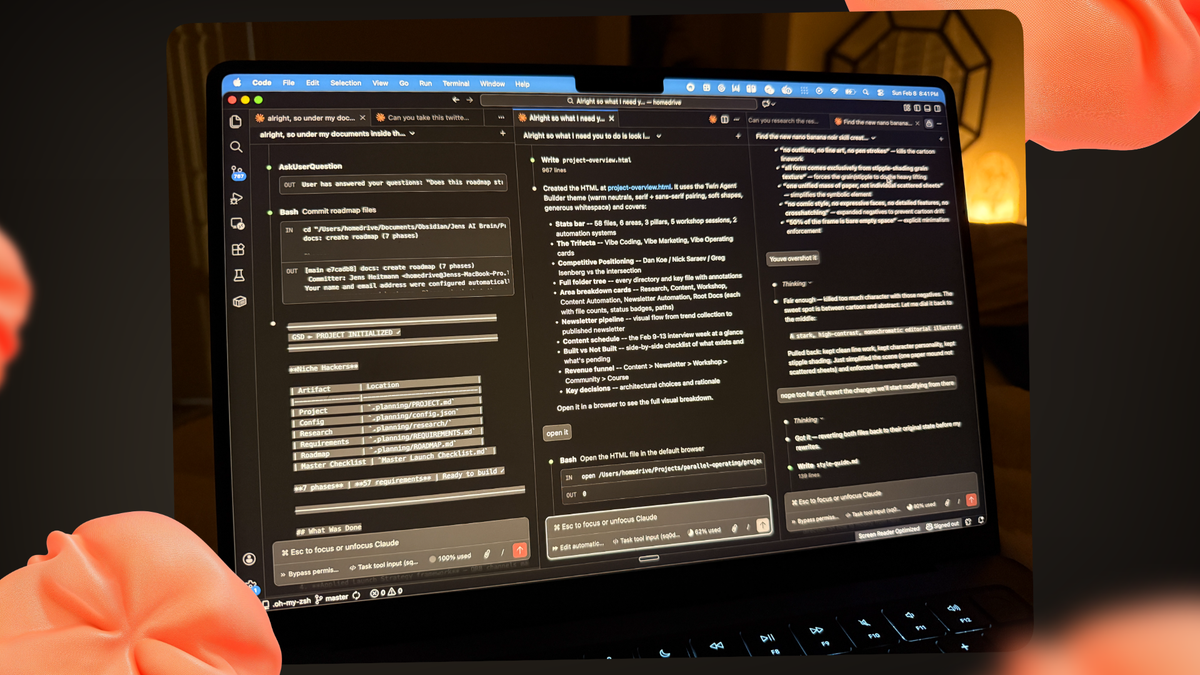
3 months ago, I was grinding through maybe 3-5 core tasks a day. Pushing 10-12 hour days. Feeling like I was sprinting on a treadmill.
Today? I'm knocking out 10+ tasks a day in 6-8 hours. Same projects. Same me. Same amount of laziness, if I'm being honest.
The difference isn't that I got faster. It's that I stopped doing all the stuff that wasn't actually the work.
The Context Tax Nobody Talks About
Here's what every single Claude session used to look like for me:

Open Claude. Re-explain my brand voice. Walk it through what I'm building. Remind it about my content strategy. Clarify my audience. Re-describe my project architecture. Tell it how I like things written. Explain my automations setup on Cloudflare and my self-hosted services.
Then, you know, actually start working.
Every. Single. Session.
I was burning 15-20 minutes just getting Claude up to speed before it could do anything useful. At 8+ sessions a day, that's 2+ hours gone. Not to actual work. Just to explaining the same context over and over again.
But it wasn't just the time. It was the mental load.
I had Notion docs with prompt after prompt. Content workflows. Brand guidelines. Project briefs. I was copy-pasting like it was 2015. Kind of embarrassing when I think about it now, but that was the reality.
Then Anthropic launched Skills.
And I would say that's when things genuinely shifted for me.
What Skills Actually Are (Most People Get This Wrong)
Most people think Skills are just saved prompts. That's like saying a recipe is just a list of ingredients.
Wrong.
Skills are executable knowledge packages that Claude loads automatically when they're relevant. They sit in a .claude/skills/ directory as SKILL.md files. When you start a session, Claude scans available skills using about 100 tokens per skill to find matches. When triggered, the full skill loads at under 5k tokens.
This is prompt engineering evolved into system design. And that distinction matters a lot.

The unlock isn't automation. It's elimination.
I didn't build 50 skills. I found & made 5 that became the biggest needle movers for how I operate. Let me walk you through each one.
Want to learn how to create custom skills with Claude?
Check this video: https://www.youtube.com/watch?v=kS1MJFZWMq4
The Skills that made the difference

Skill #1: Claude Code Superpowers
Here's the link: https://github.com/obra/superpowers
This one is kind of the foundation for everything else. What it does is push Claude Code to its actual limits by giving it a strong framework to operate within.
Before this skill, I was babysitting Claude Code constantly. Prompt engineering every request. Thinking through how to phrase things so it wouldn't go off the rails. That's cognitive load I didn't even realize I was carrying until it was gone.
With Superpowers loaded, Claude Code operates at a higher baseline. It knows how to handle context better, it doesn't need me to hold its hand through execution, and the quality of what comes back is leagues better than raw prompting.
I would say this is the skill that made me realize, oh, this isn't just about saving time. This is about raising the floor on everything Claude does for me.
Skill #2: GSD (Get Shit Done)
Link: https://github.com/glittercowboy/get-shit-done
This is the execution engine. GSD keeps me moving through tasks without getting stuck or overthinking things.
Here's my honest admission: I've been tactically lazy my entire life. A lot of raw power under an extreme amount of laziness. I can accomplish a lot in a very small window, but trying to maintain that output consistently? That feels more strenuous than doing a short burst of it.
GSD solved that problem. It gives Claude Code the framework to execute at speed without me needing to burn at 100% all the time. I can tap into my flow state when needed and then ride that momentum because GSD matches my performance level. It knows what the quality standard is. It knows what done looks like.
Between Superpowers and GSD, I basically delegated out the brainpower I used to spend thinking through how to approach every task. That's not a small thing. That's hours of decision fatigue, just gone.
Skill #3: Frontend Designer
I build a lot of internal features, education content, blog pages, product interfaces. The design side of things used to be this whole separate mental mode I had to shift into.
This skill handles the visual thinking for me. Layout decisions, component choices, design patterns, all of it follows a consistent system now instead of me reinventing the wheel every time I need a new page or feature.
The time I used to spend going back and forth on "does this look right" is basically zero now. It just looks right the first time because the skill has the design system baked in.
Skill #4: Mission Aligner
This one is custom. I built it myself, and honestly it might be my favorite.
What Mission Aligner does is take whatever content I create, whatever I'm writing, whatever I'm building, and it aligns the phrasing, perspective, and tone to match my personality and my core mission. It understands how I write. It knows my voice. It knows what I care about and how I frame things.
Before this skill, I was re-explaining "here's who I am, here's how I talk, here's what I believe" at the start of every content session. Now? Claude already knows. It's like having a writing partner who actually gets you instead of one you have to onboard every morning.
This is super valuable for anyone building a personal brand or creating content consistently. The voice consistency alone is worth the 30 minutes it took to build.
Skill #5: Prompt Enhancer
One of the biggest rules of working with AI is quality in, quality out. Most people don't think about this enough.
My Prompt Enhancer takes any prompt I give Claude Code and runs it through an enhancement pass before actually executing on it. So even when I'm being lazy with my input (which, you know, is often), the actual instruction Claude works from is high quality.
This is like having an editor between my brain and the AI. I think the rough thought, the skill refines it into something precise, and then Claude executes on that. The output quality jump was immediate and obvious.
The Real Shift: I Ran Out of Tasks
Here's the story that made me realize how much had changed.
One day, mid-week, I looked at my task list and everything was done. Not "mostly done" or "I'll finish the rest tomorrow." Actually done. And it hit me that for the first time, I didn't know what I should focus on next.

That was a super cool feeling. And also kind of disorienting, honestly. When you've spent years grinding through 10-12 hour days and suddenly you're producing the same output in 6-8 hours, it changes how you think about your own capacity.
Before and After (The Honest Version)
Before Skills (typical day):
10-12 hour days. 2+ hours lost to re-explaining context. Another hour or two on prompt engineering and babysitting Claude. Mental energy spent holding project details, brand voice, and content strategy in my head. Maybe 3-5 core tasks actually completed.
After Skills (typical day):
6-8 hours. Context loads automatically. Prompts get enhanced before execution. Voice stays consistent without me thinking about it. Tasks execute at speed with quality guardrails built in. 10+ tasks completed.
Same output. Fewer hours. And I'm not burning at 100% to maintain it.
The Systems Angle (40,000 Ft View)
Here's what I've realized about skills at a higher level. They compound with each other. My Mission Aligner works with my Prompt Enhancer. When the prompt gets refined, it gets refined through my voice. When GSD executes, it executes with Superpowers pushing the quality floor up.

This is the difference between tools and systems. Tools are additive. You add them together and get a sum. Systems are multiplicative. Each one amplifies the others.
Your first skills will be wrong. I know mine were. You'll build something too broad, or too specific, or that doesn't quite match how you actually work. That's fine. Rebuild it. Refine it. The skill that works is the one you've iterated on 3-4 times.
Start small. Refine ruthlessly.
What I'm Building Next
I'm not done. The next wave for me is all about public presence and personal brand.
I'm building skills for content creation across social media, writing presence and consistent publishing, and project-specific skills that I can share with others who want to operate the same way.
The way I see it, everything I've learned about building fast, about systems, about using Claude Code at this level, all of that can be packaged into skills and shared. That's kind of the whole point.
The Real Point
Skills exposed something I didn't want to admit: I was spending more time explaining than building.
Before skills, I thought my job was executing. Turns out, maybe 70% of my "working time" was actually re-explaining context, remembering how I do things, prompt engineering from scratch, and babysitting output quality.
The actual building? Maybe 30% of my time.
Skills didn't make me better at what I do. They eliminated the meta-work around what I do. And that's a huge difference.
Where to Start
Don't build 5 skills. Build 1 that matters.
If you're someone who executes on a lot of tasks throughout the day, start with GSD. Open Claude and say "Help me create a GSD skill that keeps me moving through tasks without overthinking." It'll interview you about how you work, what your standards are, and what done looks like for you.
20-30 minutes to create. Returns compounding value forever.
The question isn't "Should I use skills?"
The question is: what am I doing repeatedly that I should only do once?
Answer that, and you've found your first skill.

3 months ago, I was drowning in meta-work, pushing 10-12 hour days. Today, I'm producing the same output in 6-8 hours with higher quality and I'm not burning out to do it.
I didn't learn to work faster. I learned to eliminate everything that wasn't the actual work.
That's the difference between working harder and working architecturally.
What repetitive work are you doing today that could be a skill tomorrow?